
Faith FAQ: What Is Baptism?
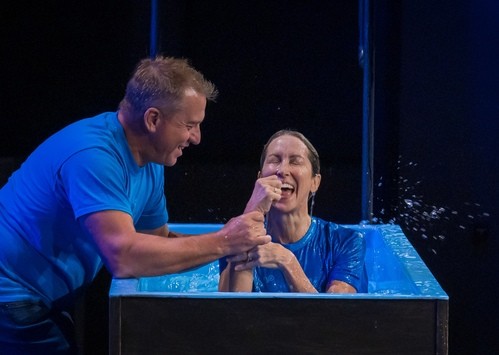
This past Sunday was Baptism Sunday, a day I always love to see at our church. Over the years, I’ve had the privilege of baptizing many people, and every time I’m reminded of what an important step it is in a believer’s walk—including in my own.
I grew up in a Christian household, where I gave my life to Christ at the age of seven. Once I came to understand my need for redemption and what Jesus accomplished for me on the cross, I prayed to receive Christ with my parents in my bedroom. Through discipleship and conversations with other believers, I also came to understand the importance of baptism. A couple of months after accepting Christ, I was baptized.
This set me on a spiritual journey that I have been on for the last 44 years. I've been serving in full-time ministry for the past 23 years and on staff at Crossroads for the last 12.
Though it was many years ago now, I remember my understanding of baptism as a new believer didn’t come all at once. I know it can raise a lot of questions—particularly because of the different opinions you may hear about it. Maybe you’ve been baptized as an infant and been told that covers your bases. Maybe you’ve had a friend tell you to wait to be baptized, even if you’re already following Christ.
But like with all things in our faith, Scripture is our basis. Today, my hope is to help you better understand what God’s Word says about baptism, an important act of obedience for Christians.
I grew up in a Christian household, where I gave my life to Christ at the age of seven. Once I came to understand my need for redemption and what Jesus accomplished for me on the cross, I prayed to receive Christ with my parents in my bedroom. Through discipleship and conversations with other believers, I also came to understand the importance of baptism. A couple of months after accepting Christ, I was baptized.
This set me on a spiritual journey that I have been on for the last 44 years. I've been serving in full-time ministry for the past 23 years and on staff at Crossroads for the last 12.
Though it was many years ago now, I remember my understanding of baptism as a new believer didn’t come all at once. I know it can raise a lot of questions—particularly because of the different opinions you may hear about it. Maybe you’ve been baptized as an infant and been told that covers your bases. Maybe you’ve had a friend tell you to wait to be baptized, even if you’re already following Christ.
But like with all things in our faith, Scripture is our basis. Today, my hope is to help you better understand what God’s Word says about baptism, an important act of obedience for Christians.
Why do Christians practice baptism?
Baptism is an outward expression of an inward commitment that a person has made to follow and place their trust in the finished work of Jesus. It’s a public profession of faith in what Jesus did for them in His work on the cross.
Of course, when John the Baptist first began performing baptisms, the cross had not yet happened. Unlike other purification rituals practiced in Judaism, John called people to a one-time immersion as a symbol of repentance in preparation for the coming Messiah (Matthew 3:1-6).
But what makes baptism still so significant is that Jesus both participated in it and later commanded His followers to baptize new believers. About His own baptism, He said to John, “Let it be so now, for thus it is fitting for us to fulfill all righteousness” (Matthew 3:15). Though Jesus had no sins to forgive, His baptism set an example for those who would follow Him.
Along with this model, Christians practice baptism because we believe it is an ordinance of the Lord. An ordinance is something that is ordained or commanded by Jesus. Among His final instructions before ascending to Heaven, Jesus commanded that believers go and make disciples, baptizing them in the name of the Father, the Son, and the Holy Spirit (Matthew 28:19-20). Christian baptism is an act of obedience that follows salvation—because in this command, known as the Great Commission, Jesus presents baptism as a response for those who have become disciples.
In Romans 6:4, Paul writes that “[w]e were buried therefore with Him by baptism into death, in order that, just as Christ was raised from the dead by the glory of the Father, we too might walk in newness of life.” This means Christian baptism is more than a ritual—it illustrates the death, burial, and resurrection of Christ. At the same time, it also illustrates our death to sin and new life in Christ.
The Greek word baptizo, in its original Biblical context, means “to immerse,” “to submerge,” or “to wash” by dipping under water. Being submerged under water represents our death to sin, and emerging out of the water represents the cleansed, holy life that follows salvation.
So when a person gets baptized, we can know they are publicly declaring, “I confess faith in Christ and what He did for me on the cross; I believe Jesus has cleansed me from my sin; and I now want to walk as a new creation, freed from the bondage of sin.”
Of course, when John the Baptist first began performing baptisms, the cross had not yet happened. Unlike other purification rituals practiced in Judaism, John called people to a one-time immersion as a symbol of repentance in preparation for the coming Messiah (Matthew 3:1-6).
But what makes baptism still so significant is that Jesus both participated in it and later commanded His followers to baptize new believers. About His own baptism, He said to John, “Let it be so now, for thus it is fitting for us to fulfill all righteousness” (Matthew 3:15). Though Jesus had no sins to forgive, His baptism set an example for those who would follow Him.
Along with this model, Christians practice baptism because we believe it is an ordinance of the Lord. An ordinance is something that is ordained or commanded by Jesus. Among His final instructions before ascending to Heaven, Jesus commanded that believers go and make disciples, baptizing them in the name of the Father, the Son, and the Holy Spirit (Matthew 28:19-20). Christian baptism is an act of obedience that follows salvation—because in this command, known as the Great Commission, Jesus presents baptism as a response for those who have become disciples.
In Romans 6:4, Paul writes that “[w]e were buried therefore with Him by baptism into death, in order that, just as Christ was raised from the dead by the glory of the Father, we too might walk in newness of life.” This means Christian baptism is more than a ritual—it illustrates the death, burial, and resurrection of Christ. At the same time, it also illustrates our death to sin and new life in Christ.
The Greek word baptizo, in its original Biblical context, means “to immerse,” “to submerge,” or “to wash” by dipping under water. Being submerged under water represents our death to sin, and emerging out of the water represents the cleansed, holy life that follows salvation.
So when a person gets baptized, we can know they are publicly declaring, “I confess faith in Christ and what He did for me on the cross; I believe Jesus has cleansed me from my sin; and I now want to walk as a new creation, freed from the bondage of sin.”
Is baptism necessary for salvation?
While baptism is commanded and modeled by Jesus, it is not necessary for salvation. Baptism does not save us; instead, salvation comes by belief and confession in Jesus as Savior. Romans 10:9-10 tells us “if you confess with your mouth that Jesus is Lord and believe in your heart that God raised Him from the dead, you will be saved. For with the heart one believes and is justified, and with the mouth one confesses and is saved.”
The pattern presented in Scripture is that one believes first and then they are baptized. Definitionally, if baptism is an outward expression of an inward commitment, it is only symbolizing the transformed life that comes with salvation—because the commitment has already come first.
In Luke 23:39-43, when Jesus was on the cross, He hung between two criminals—one who mocked Him and another who defended Him. The criminal who defended Him said, “[T]his man has done nothing wrong,” and asked Jesus if He would remember him when He goes to paradise. Jesus told the man, “[T]oday you will be with me in paradise.”
This is the Gospel at work: the thief believed and confessed, and Jesus promised him eternal life because of his faith. But there’s another layer here where baptism is concerned. This moment took place before Jesus gave the Great Commission and instituted Christian baptism, reminding us that salvation comes through faith in Christ alone.
That means baptism does not save us but is an act of obedience to be carried out after salvation. It’s a public declaration made by someone who has put their faith and trust in Jesus. Through baptism, believers can share their new identity in Christ and find union with His church.
The pattern presented in Scripture is that one believes first and then they are baptized. Definitionally, if baptism is an outward expression of an inward commitment, it is only symbolizing the transformed life that comes with salvation—because the commitment has already come first.
In Luke 23:39-43, when Jesus was on the cross, He hung between two criminals—one who mocked Him and another who defended Him. The criminal who defended Him said, “[T]his man has done nothing wrong,” and asked Jesus if He would remember him when He goes to paradise. Jesus told the man, “[T]oday you will be with me in paradise.”
This is the Gospel at work: the thief believed and confessed, and Jesus promised him eternal life because of his faith. But there’s another layer here where baptism is concerned. This moment took place before Jesus gave the Great Commission and instituted Christian baptism, reminding us that salvation comes through faith in Christ alone.
That means baptism does not save us but is an act of obedience to be carried out after salvation. It’s a public declaration made by someone who has put their faith and trust in Jesus. Through baptism, believers can share their new identity in Christ and find union with His church.
Who should be baptized?
Since it’s an outward expression of an inward commitment, it’s a step that should be reserved for people who choose to follow Christ because of what He did for them on the cross. Baptism is for those people who have recognized their need for repentance, made a personal profession of faith in Christ, and received the Holy Spirit to begin His transforming work.
Because it follows this personal response to the Gospel, though, many people ask what it means if they were baptized as a baby. Baptism in Scripture always follows repentance and faith, rather than a covenant sign (such as infant baptism) being administered before a personal profession of faith. Since an infant can’t personally choose to trust Christ or profess their faith, nor did they have a choice when they were baptized, their first baptism only reflects their parents’ desire to help lay the foundations of faith. While your parents’ faith could point you to Jesus and show you the way to Him, it can’t believe for you.
I don’t say this to reject what your parents did out of love and devotion; rather, I would encourage you to consider whether you’ve personally responded to the Gospel by placing your faith in Jesus.
Our salvation is found in recognizing that God provided a way for mankind to be redeemed and that way is through Jesus. In John 14:6, Jesus states, “‘I am the way, and the truth, and the life. No one comes to the Father except through me.’” Jesus is not just a way; He is the only way to be made right with God.
That’s because, as Romans 3:23 states, “all have sinned and fallen short of the glory of God.” All people have missed the mark that God set and, as a result, are under the curse of sin and in need of salvation. Jesus provided that way of salvation by His death on the cross—and we only have to repent, admitting our sin to Him, to accept His gift.
To be baptized means that you have responded to all of this by repenting of your sins and identifying with Christ, who made the payment for you.
Because it follows this personal response to the Gospel, though, many people ask what it means if they were baptized as a baby. Baptism in Scripture always follows repentance and faith, rather than a covenant sign (such as infant baptism) being administered before a personal profession of faith. Since an infant can’t personally choose to trust Christ or profess their faith, nor did they have a choice when they were baptized, their first baptism only reflects their parents’ desire to help lay the foundations of faith. While your parents’ faith could point you to Jesus and show you the way to Him, it can’t believe for you.
I don’t say this to reject what your parents did out of love and devotion; rather, I would encourage you to consider whether you’ve personally responded to the Gospel by placing your faith in Jesus.
Our salvation is found in recognizing that God provided a way for mankind to be redeemed and that way is through Jesus. In John 14:6, Jesus states, “‘I am the way, and the truth, and the life. No one comes to the Father except through me.’” Jesus is not just a way; He is the only way to be made right with God.
That’s because, as Romans 3:23 states, “all have sinned and fallen short of the glory of God.” All people have missed the mark that God set and, as a result, are under the curse of sin and in need of salvation. Jesus provided that way of salvation by His death on the cross—and we only have to repent, admitting our sin to Him, to accept His gift.
To be baptized means that you have responded to all of this by repenting of your sins and identifying with Christ, who made the payment for you.

Written by
Robbie Thomas, Discipleship & Men's Pastor
Our Faith FAQ series addresses foundational Christian topics that can often come with questions—especially for new believers. Each post is written by one of our ordained staff members, who have devoted years to studying and teaching God's Word.
Learn More about Baptism
Each Baptism Sunday, we invite new or rededicated believers to celebrate the new life you have in Christ with our church family. If you believe this is a step God is calling you to take, we invite you to apply to be baptized at Crossroads!
For us, this process is more than a one-time event—we want to get to know you, encourage your relationship with God, and walk alongside you as you continue in the newness of life Christ has given you.
For us, this process is more than a one-time event—we want to get to know you, encourage your relationship with God, and walk alongside you as you continue in the newness of life Christ has given you.
No Comments